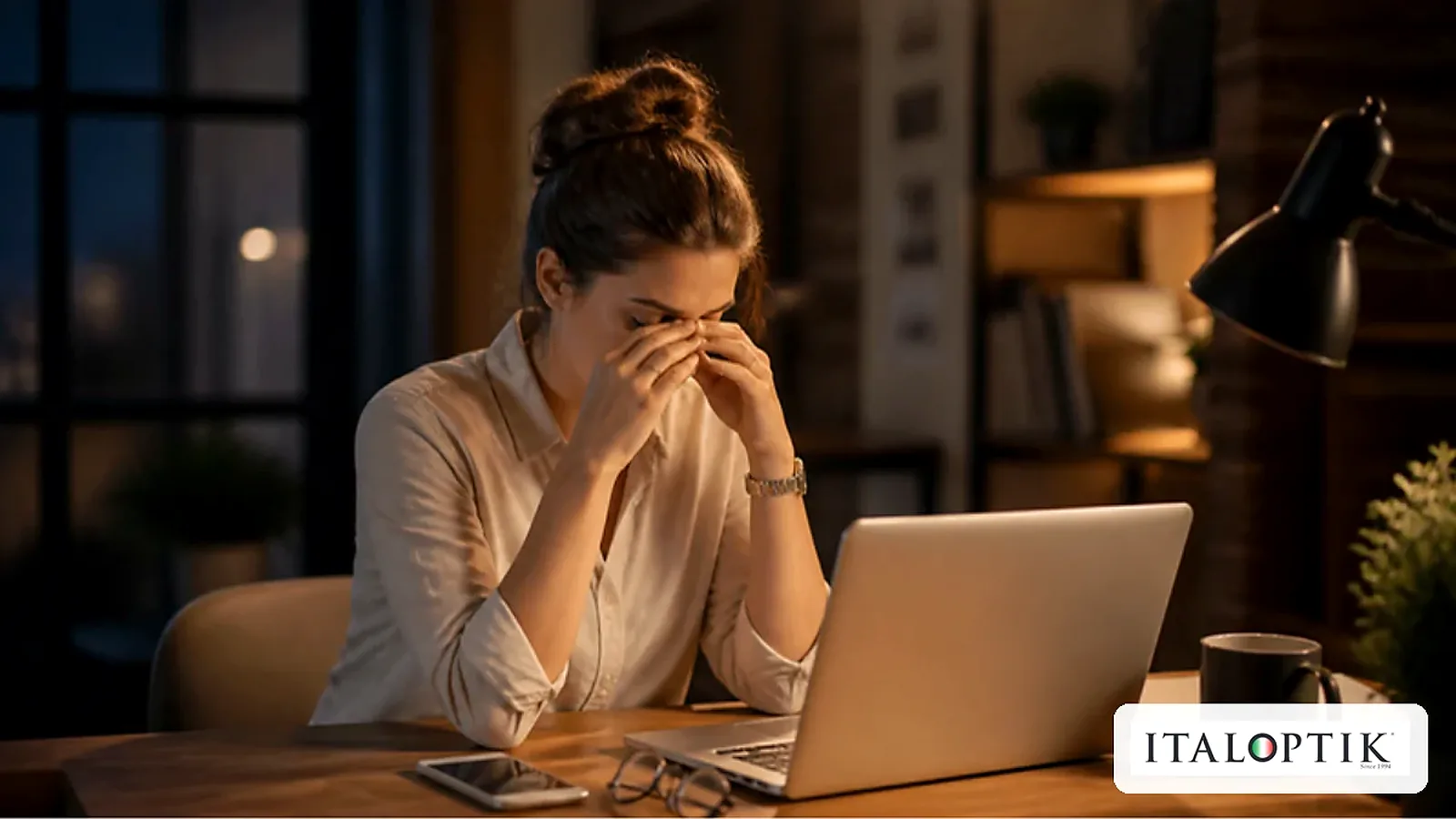
The phone in the morning, the computer at work, the TV in the evening. Many of us spend more than 8 hours a day in front of a screen. No wonder our eyes feel dry, red or heavy by the end of the day. The good news is that with a few simple habits and the right glasses, your eyes can feel much more relaxed.
Why do our eyes get tired in front of a screen?
When we look at a screen, our eyes work non-stop at the same distance and the muscles that focus up close never get a rest. On top of that, we blink far less often than usual in front of a screen, sometimes only half as much, so the surface of the eye dries out faster.
Doctors call this screen syndrome or digital eye strain. It does not damage the eyes permanently, but it makes the day harder and it is often a sign that your eyes need a check-up or glasses suited to them.
The most common signs
- Dry eyes that burn or water
- Red eyes at the end of the day
- Blurry vision for a moment when you look up from the screen
- Headaches, especially on the forehead and around the eyes
- Neck and shoulder pain from sitting at the computer
- Greater sensitivity to light
The 20-20-20 rule
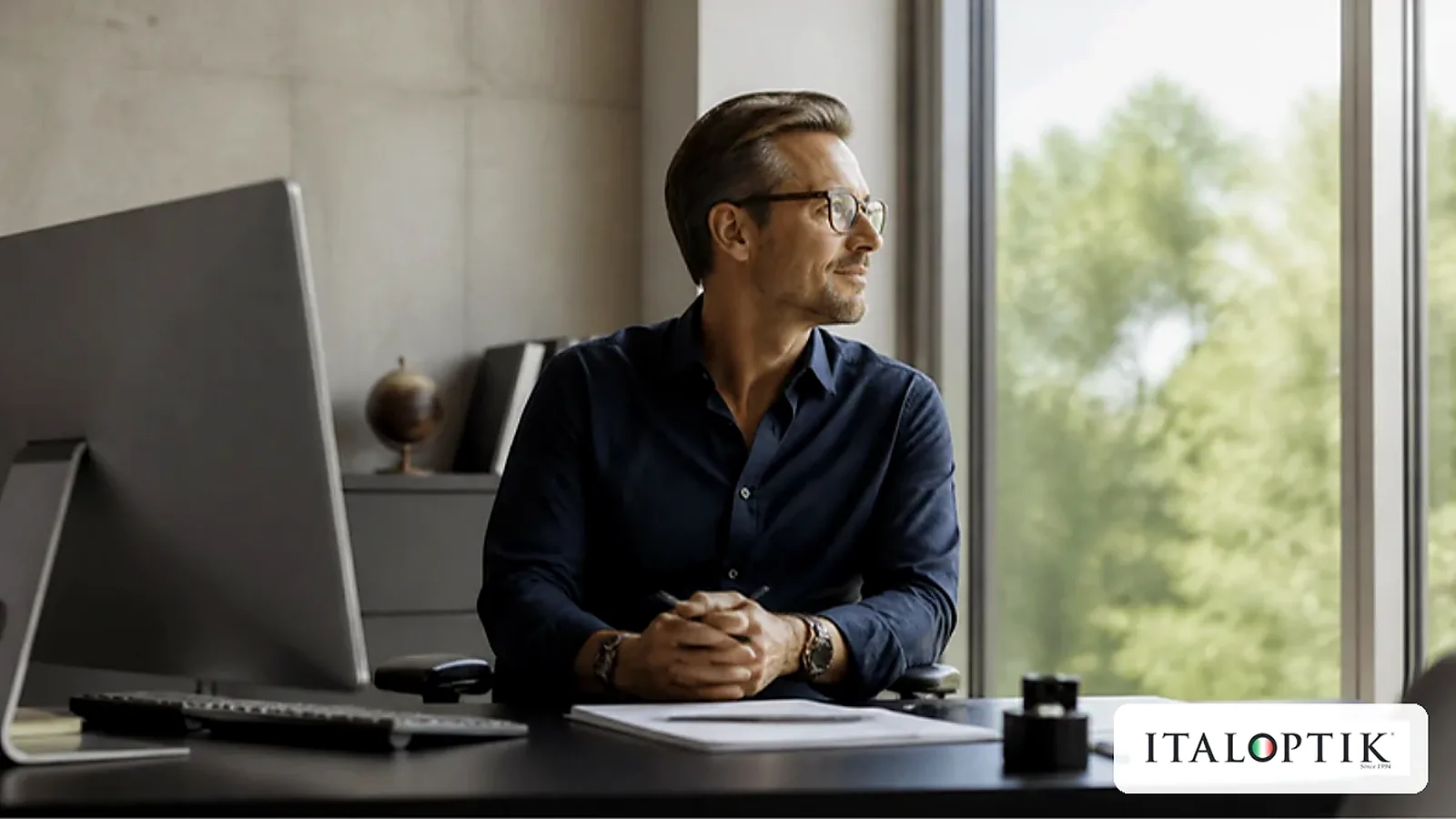
It is the simplest and most useful habit: every 20 minutes, look at something about 6 metres (20 feet) away for at least 20 seconds. A window, the end of the corridor or a tree outside is enough. This lets the eye muscles relax and reminds you to blink.
A few more tips that help a lot:
- Blink more often. When your eyes feel dry, close them gently for a few seconds.
- Keep the screen at a distance. The computer should be about an arm’s length away and slightly below eye level.
- Adjust the light. The screen should not be much brighter than the room. Avoid strong light from a window behind or in front of the screen.
- Make the letters bigger. There is no need to squint to read. Increase the text size on your phone and computer.
- Put the phone down before bed. An hour without screens before sleep rests your eyes and helps you sleep.
Glasses that help in front of a screen
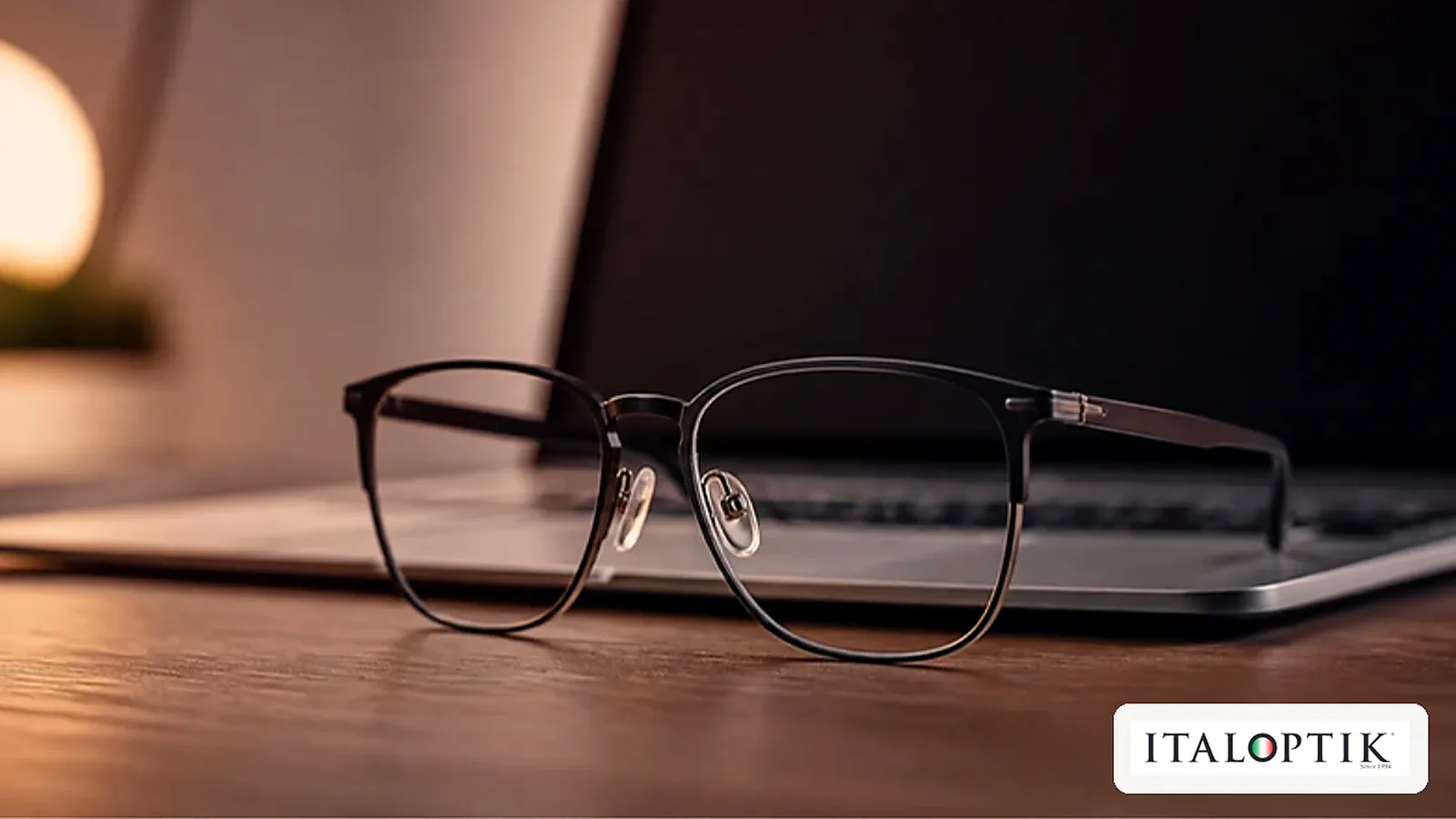
Often the strain comes from a small prescription that has not been corrected yet, or from old glasses that no longer suit you. Even half a dioptre left uncorrected is enough to make your eyes tire faster at the screen.
At Italoptik we recommend lenses based on how you use your eyes during the day:
- Anti-reflective lenses. They remove reflections from the screen and from lamps, so your eyes do not tire for nothing.
- Blue light filter lenses. They soften part of the blue light that comes from screens and make vision more comfortable, especially for people who work many hours at a computer.
- Office lenses. For those who spend the whole day at a desk, there are lenses designed specifically for computer and document distance.
- Progressive glasses. After 40, a single pair lets you see the screen, your phone and the distance clearly, without taking your glasses off.

What about children?
Children today spend a lot of time with tablets and phones, often very close to their eyes. They rarely complain, so parents should pay attention if a child rubs their eyes, gets very close to the screen or has headaches. Time outdoors, in daylight, is very good for their eyes. If you notice these signs, a visit to the ophthalmologist will show whether your child needs glasses.
When should you have a check-up?
If your eyes get tired every day even though you follow the tips above, it is a good idea to visit the ophthalmologist. We recommend an eye check-up every 6 to 12 months, or whenever your doctor recommends it.
Book your visit
Find us in Selvia, at the Castle (Kala) and in Fier. Our ophthalmologists and opticians will check your eyes and recommend the lenses that suit your screen work best. Call us to book:
- Selvia: +355 4 222 2985 · +355 69 707 0097
- Kalaja: +355 69 203 9770
- Fier: +355 69 400 3377
This article is for information only and does not replace a visit to the ophthalmologist. The right solution is decided by the specialist after an examination.